Category: History

  • Caravelle Boat-Show Bound, in 1962

    Caravelle Boat-Show Bound, in 1962

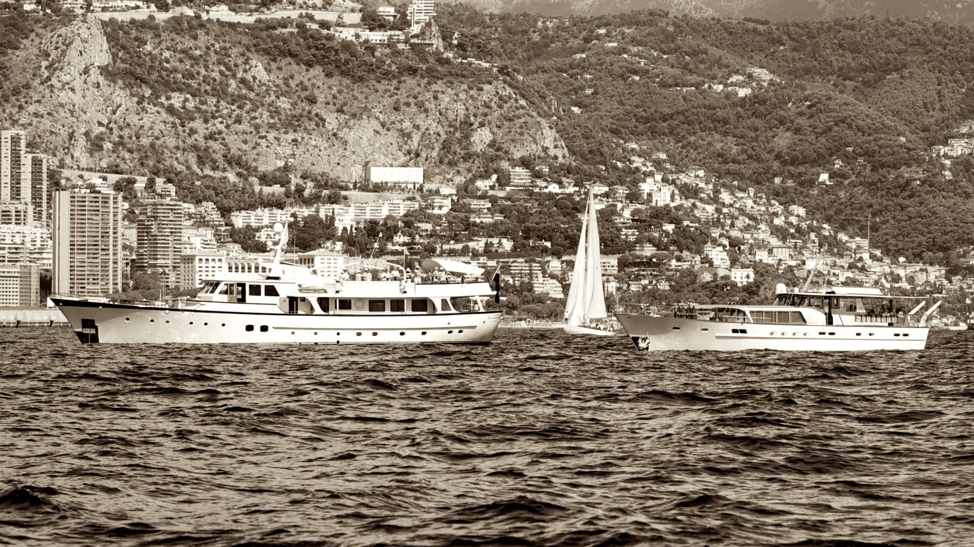
    At the London Boat Show in 1959, Freddy Heineken convinced Carlo Riva that if he wanted to design larger yachts than the typical runabouts that Riva was and remains famous for, he should only cooperate with Feadship. The name for the limited series of Riva-designed, Feadship-built yachts ‘Caravelle’ was unanimously decided by both parties after their admiration for the new French civil transport aircraft. At the time, this aircraft was the symbol of innovative luxury and evident modernity, which perfectly embodied the values upheld by the two shipyards. The results where stunning.

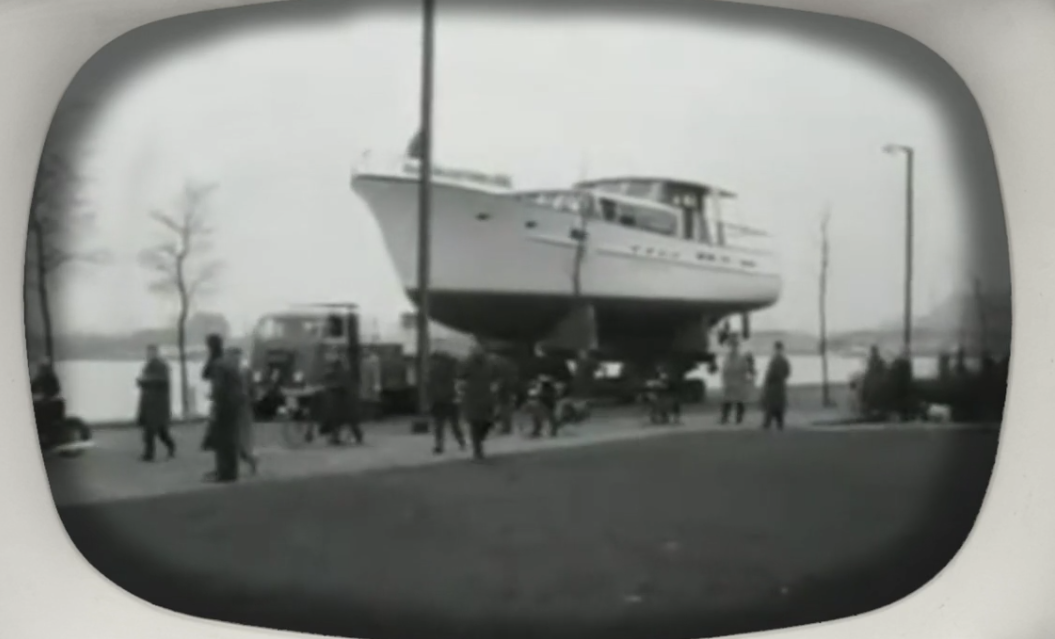
    Here’s a fun video circa 1959, courtesy of Serena‘s builder, Feadship, which shows an earlier Caravelle headed to a local boat show in The Netherlands. Click the image to watch the video.

    Click image to watch this Caravelle (Serena sistership) en route to a Dutch Boat Show.
  • Invictus Article Serena

    Invictus Article Serena

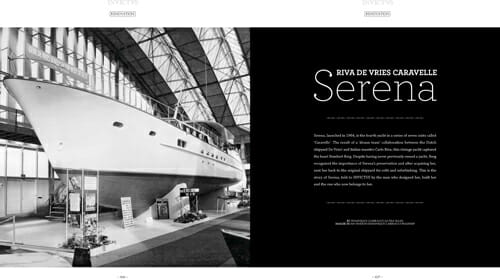
    Riva De Vries Caravelle Serena in Invictus Magazine

    [flipbook pdf=”https://myserena.org/wp-content/uploads/2018/06/Invictus-Serena.pdf”]

    MORE HISTORY


  • Feadship Refit Brochure

    Feadship Refit Brochure

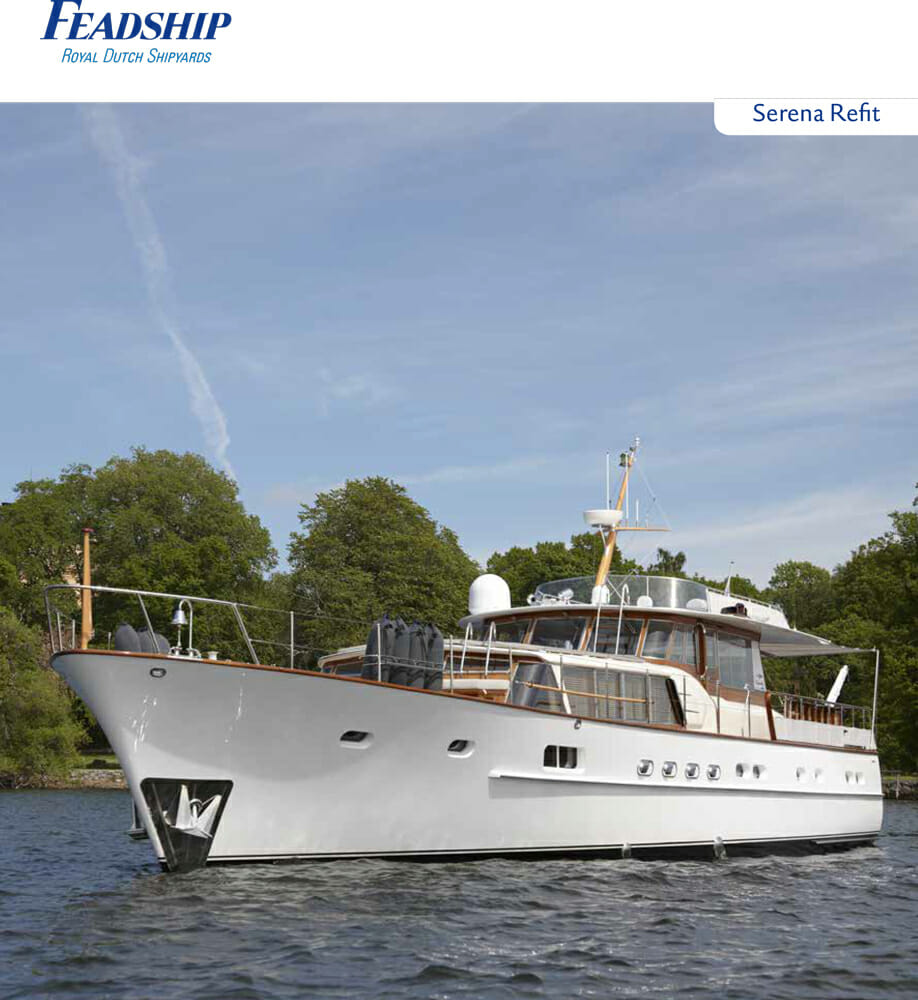
    Feadship Serena Refit Brochure

    [flipbook pdf=”https://myserena.org/wp-content/uploads/2018/08/feadship_serena-1.pdf”]

    MORE HISTORY


  • Feadship Original Brochure

    Feadship Original Brochure

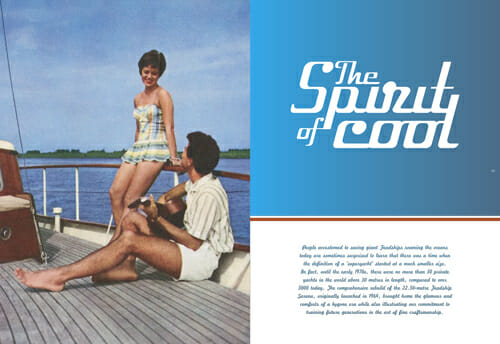
    Original Serena Brochure

    [flipbook pdf=”https://myserena.org/wp-content/uploads/2018/08/PilotArticleSerena.pdf”]

    MORE HISTORY


  • Riva’s History

    Riva’s History

    Riva’s History

    The Riva boatyard was established in 1842 on Lake Iseo in Sarnico, Italy after a devastating storm damaged the boats of the local fishermen. A young shipbuilder and craftsman – new to the area and named Pietro Riva – repaired most of the crafts, thus winning the trust of the locals. This was the beginning of the legend of Riva.


    Riva rapidly gained great respect and recognition for creating boats of unmatched style and personality. Ernesto Riva succeeded his father Pietro and introduced internal combustion engines on Riva boats, thus giving rise to an era of large cargo and passenger boats operating on the lake. After World War I, Serafino Riva turned the boatyard’s precious crafts into a real brand; emphasis shifted from transportation to power boating, which at the time was still dawning.


    The 1950s were the years of Serena‘s designer Carlo Riva, who had been driven by boundless passion for boats and the family business since he was a child. Riva, by then, had become synonymous with elegance, status and perfection. Selected materials of the highest quality, a painstaking care for the tiniest details, unparalleled, long-standing expertise and craftsmanship – Riva’s creations became the object of desire for the aristocracy, award winning athletes, successful businessmen and movie stars.In the decade of the Italian industrial revolution, dominated by the myth of speed and racing cars, “l’Ingegnere”, as Carlo Riva is called, sensed the importance of this phenomenon and created a series of wooden yachts characterized by unique, unmistakable design features.


    In September 1969, Carlo Riva, frustrated by a tough union climate, sold the shipyard to the U.S. company Whittaker, maintaining the role of Chairman and General Manager, from which he resigned in 1971.


    Today, the Ferretti Group of Italy owns Riva and maintains the original shipyard in Sarnico as well as a production center in La Spezia.

    Riva
    Riva Ad

    TAKEAWAY

    Carlo Riva, who had been driven by boundless passion for boats and the family business since he was a child. 

  • Feadship History

    Feadship History

    Feadship’s History

    Formed as a group in 1949, the First Export Association of Dutch Shipbuilders (Feadship) has roots that can be traced back to the 1800s when iconic boats were launched under the leadership of the De Vries and Van Lent families. Many of their descendants have continued to create Feadships well into the 21st century.


    The De Vries and Van Lent shipyards served owners around the world before World War II. The terrible destruction of that conflict meant that very few people in Europe could afford to buy luxury yachts in its immediate aftermath. Ever innovative, always adventurous, the De Vries and Van Lent families came together with several other Dutch yards to approach the American market, where sales were booming in the late 1940s. Joining them, among other companies, were De Voogt Naval Architects, which was responsible for the engineering of Serena.


    Feadship was introduced to the American public at the 1951 New York Boat Show and immediately sold three boats. Feadship’s skill with steel, which was rarely used for yachts in North America at the time, was clearly evident. As orders started flowing in for motorboats in both steel and aluminium, Feadship stopped building wooden yachts – Souris II in 1955 was the last. Feadship was now firmly established in the lucrative American market and coming to the attention of some pretty famous people, including Malcolm Forbes, and later, Henry Ford II and Arthur Wirtz, among others.


    In the ’60s, Feadship’s relentless pursuit of perfection revolutionized the way people saw motoryacht cruising. It was a golden era for new ideas, and fully raised wheelhouses or a genuine transatlantic capability were just two of the various markers in construction history to be reached and surpassed. Many of the cool yachts built in this decade are leading members of the Feadship Heritage Fleet today.

    {{ brizy_dc_image_alt uid='wp-9d8670b01b2e0f56722fba83715c5bb8' }}
    {{ brizy_dc_image_alt uid='wp-974cd64b19a351808b1d46850c8f8483' }}

    TAKEAWAY

    The project gave an incredible hands-on education to some of the most promising young boatbuilding talents in Holland.